
Atherosclerosis
Atherosclerosis Definition
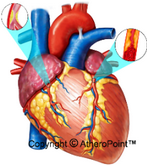
Atherosclerosis or Arteriosclerotic Vascular Disease (ASVD) is a common illness that occurs when plaques (atherosclerotic lesions) form and build up in the arteries which leads to hardening and narrowing of the artery walls. It is a long-lasting degenerative disease of the arterial wall, leading to complications such as myocardial infarction and stroke, if left undiagnosed.

Atherosclerosis Statistics
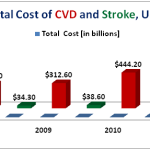
Cardiovascular Disease and stroke are the first and fourth leading cause of deaths in the United States. Heart disease is the number one killer of women. In 2010, heart disease claimed 597,689 lives [one in 4 deaths] and stroke claimed 129,476 lives [one in 19 deaths]. More than 80 million Americans have some form of CVD.
Atherosclerosis Genesis
Early on atherosclerotic lesions start as ‘fatty streak’, which is an extracellular lipid pool with an accumulation of lipid-rich macrophages and T lymphocytes within the inner surface of the artery wall (intima). Each of the stages in the lesion progression is reversible.
