
Leukoaraiosis & Atherosclerosis
Definition of Leukoaraiosis
Leukoaraiosis (LA) is a condition caused by a variety of changes, such as myelin pallor, axonal loss, gliosis, loss of ependymal cells, enlarged perivascular spaces, multiple small vessel infarcts in sub cortical white matter and a blood–brain barrier breakdown, leading to cerebral white matter rarefaction (“araiosis”) which is observed as decreased density on CT and increased signal intensity on T2/FLAIR sequences in MRI brain scans. It is more commonly found in elderly people and stroke patients.
The exact causes that lead to the development of LA are ambiguous. But hypertension, smoking, diabetes, alcohol consumption, cardiovascular disease, gait abnormalities, depression and hyperhomocysteinemia increase the risk of leukoaraiosis. Leukoaraiosis increases the chance for dementia, stroke, vascular death, gait apraxia, intracerebral hemorrhage and cerebrovascular disorders. With the life span of the world’s population increasing, the occurrence of LA will raise and become more clinically important in the geriatric population.
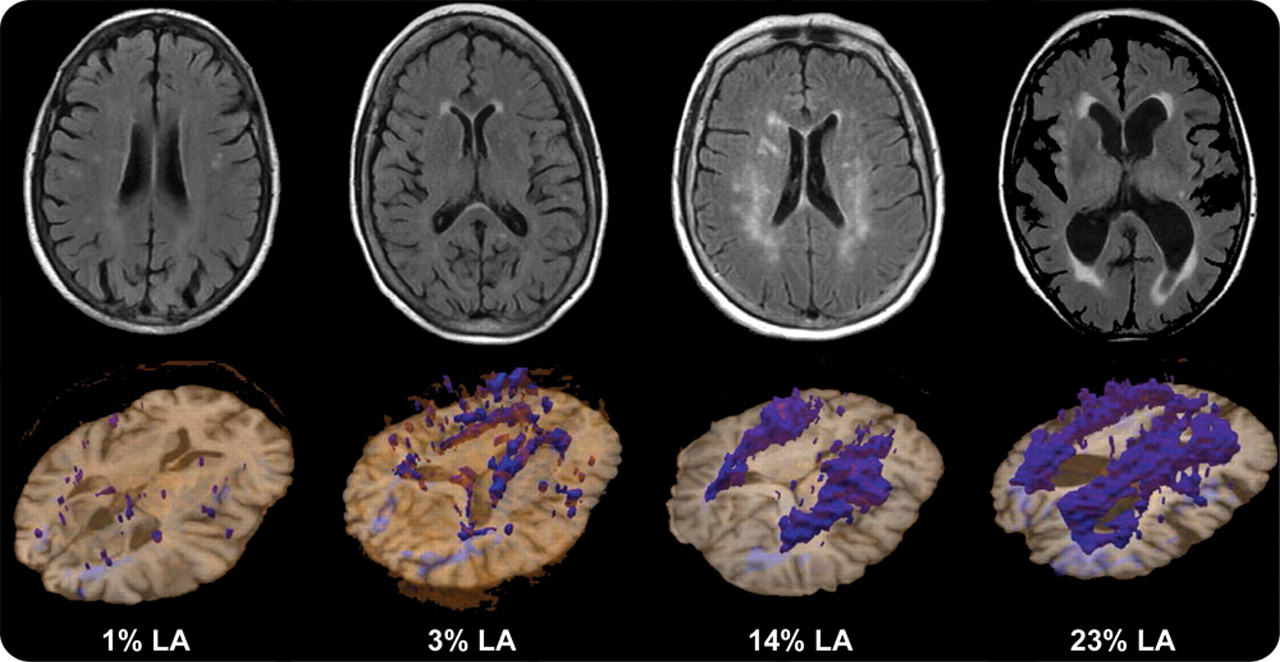
The pathogenesis of LA is unclear. It is predominantly noted that small-vessel disease and disruption of the blood-brain barrier are the main factors leading to white matter hyperintense lesions (WMHLs). However, there is growing evidence linking large-vessel atherosclerosis with leukoaraiosis and deep white matter infarcts. Below image depicts the different stages of Leukoaraiosis.
Link between Leukoaraiosis & Atherosclerosis
Recent studies performed on a group of acute ischemic stroke and TIA patients have revealed a significant relation between carotid atherosclerosis and LA. The presence of carotid atherosclerosis is confirmed with higher common carotid artery IMT measurements and occurrence of carotid plaques. The study as shown that IMT and age are more eminent contributors to LA compared to other cardiovascular risk factors and stroke patients with carotid plaques tended to have more prevalence of WMCs as well as advanced WMCs than patients free of carotid plaques. The study has shown that patients with advanced atherosclerosis fall into increased risk of developing advanced WMCs.
Yet in another study performed on elderly patients an association between carotid atherosclerosis and cerebral white matter lesions has been demonstrated. It has been shown that the severity of periventricular white matter lesions increases with growing number of plaques in the carotid artery and an increase in intima media thickness was associated with an increased severity of periventricular white matter lesions.
Leukoaraiosis increases the vulnerability of individuals to stroke. An increase in carotid intima media thickness (IMT) measures the severity of damage observed in the arteries by various vascular risk factors and is a valid indicator of atherosclerosis which is predictor for stroke and coronary complications. There is a strong, reliable and dependable relationship between LA and increasing carotid IMT in elderly individuals.